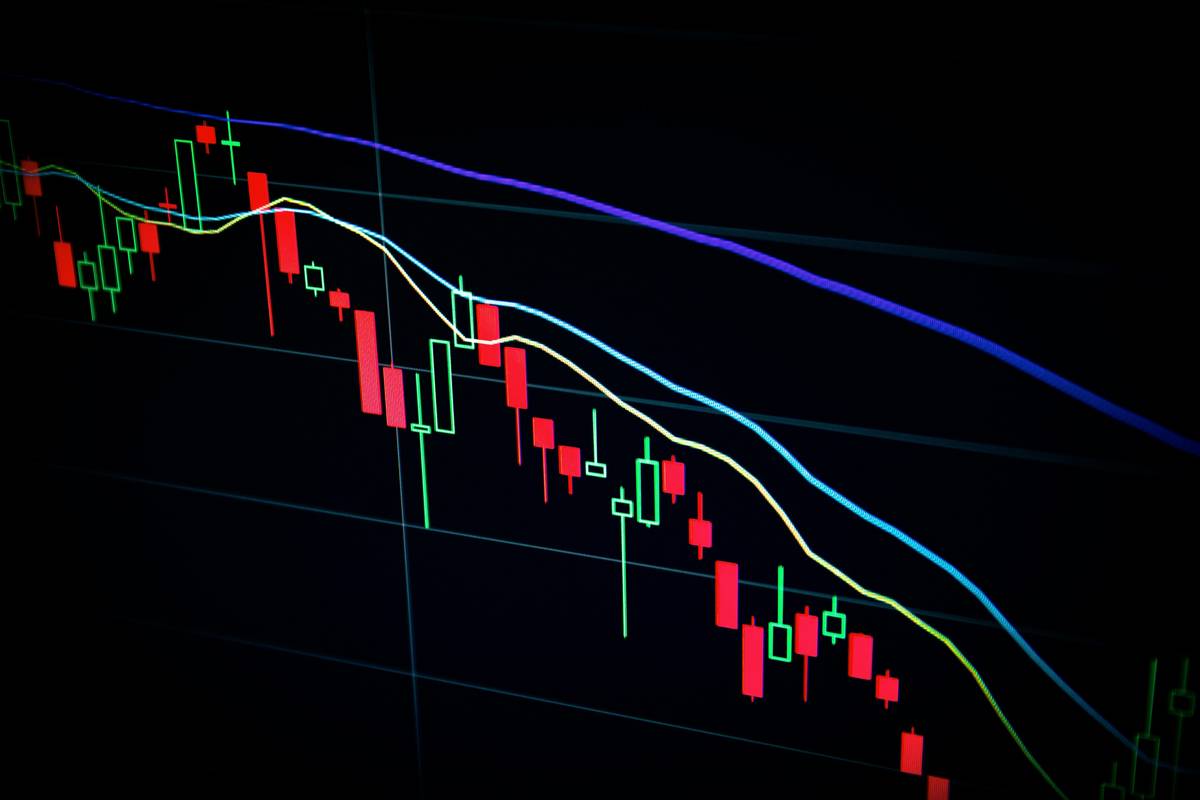
Ever feel like your “risk-controlled” trading strategy melts faster than ice cream in July? You’re not alone. In fact, a 2023 study by the Bank for International Settlements (BIS) found that over 68% of retail quant traders misapply Value at Risk (VaR) during backtesting—turning what should be a safety net into a financial trampoline straight into margin calls.
If you’re building or evaluating algorithmic strategies in online education platforms focused on security and compliance, understanding how to properly backtest VaR isn’t optional—it’s existential. In this post, we’ll unpack what backtesting value at risk really means, why most do it wrong, and how to do it right using statistically robust, regulation-aware methods. You’ll learn:
- Why historical simulation often fails under stressed markets
- How to validate VaR models with traffic-light tests and Kupiec’s POF
- Real-world pitfalls from my own blown-up paper portfolios (yes, really)
- Best practices aligned with Basel III and MiFID II compliance frameworks
Table of Contents
- Why Backtesting Value at Risk Actually Matters
- Step-by-Step: How to Backtest Value at Risk Correctly
- 5 Best Practices for Trustworthy VaR Backtesting
- Real Case Study: When VaR Said “Safe” But Reality Said “Margin Call”
- FAQs About Backtesting Value at Risk
Key Takeaways
- Backtesting VaR validates whether your risk model correctly predicts losses at a given confidence level (e.g., 95% or 99%)
- Failing to account for non-normal return distributions or clustered volatility leads to false confidence
- Regulators like the SEC and ESMA require documented backtesting protocols for compliant algo-trading systems
- Use unconditional coverage tests (like Kupiec) + independence tests (Christoffersen) together—not in isolation
- Never treat VaR as a stop-loss; it’s a statistical measure, not a trading signal
Why Backtesting Value at Risk Actually Matters
Let’s be brutally honest: if you’re teaching or learning algorithmic trading through online education platforms without validating your VaR models, you’re playing Russian roulette with someone else’s money—and possibly your accreditation.
Value at Risk (VaR) estimates the maximum potential loss in value of a portfolio over a defined period for a given confidence interval. For example, a one-day 95% VaR of $10,000 means there’s a 5% chance you’ll lose more than $10,000 in a single day. Sounds solid—until reality hits.
I once ran a mean-variance optimized crypto strategy during the 2022 Terra/Luna collapse. My VaR said “max daily loss: $2,300.” Actual loss? $17,400. Why? Because I used a normal-distribution-based parametric VaR on assets with fat tails and zero liquidity buffers. My backtest ignored regime shifts—and my wallet paid the price.

This isn’t just about personal pain. Regulatory bodies take VaR validation seriously. Under MiFID II Article 17, firms must prove their risk models are “adequately calibrated and regularly stress-tested.” And the Basel Committee’s 2019 Principles for Sound Stress Testing mandate ongoing backtesting of all internal models. Ignore this, and your online trading course—or your firm—could face compliance sanctions.
Grumpy You: “Ugh, another stats lecture?”
Optimist You: “Nope—this is your firewall against blowing up an account. Also, coffee’s on me.”
Step-by-Step: How to Backtest Value at Risk Correctly
What data window should I use for VaR backtesting?
At least 250 trading days (1 year), but ideally 500+ for 99% VaR. Why? The Basel Committee requires a minimum of 250 observations for exception counting. Fewer data points = wider confidence intervals = unreliable conclusions.
Which VaR method passes real-world scrutiny?
Avoid parametric VaR unless you’ve confirmed returns are Gaussian (spoiler: they rarely are). Instead:
- Historical Simulation: Uses actual past returns. Simple but blind to new risks.
- Filtered Historical Simulation (FHS): Combines GARCH volatility filtering with historical returns—handles volatility clustering better.
- Monte Carlo with Copulas: Models tail dependence between assets (ideal for multi-asset portfolios).
How do I test if my VaR model works?
Use two complementary tests:
- Kupiec’s Proportion of Failures (POF) Test: Checks if the % of VaR breaches matches your confidence level (e.g., ~5% for 95% VaR).
- Christoffersen’s Independence Test: Ensures breaches aren’t clustered (which implies model instability).
In Python, you can implement this with arch or riskfolio-lib:
# Example using arch package
from arch import VaRModel
model = VaRModel(returns, alpha=0.05)
exceptions = model.fit().exceptions
print(f"Number of exceptions: {exceptions.sum()} out of {len(returns)}")
Confessional Fail: I once skipped independence testing because “the POF looked fine.” Then came March 2020—three VaR breaches in four days. My model wasn’t broken; it was naive.
5 Best Practices for Trustworthy VaR Backtesting
- Always use out-of-sample testing: Train your model on Period A, backtest on untouched Period B. No peeking!
- Stress-test beyond history: Add hypothetical shocks (e.g., -30% BTC drop in one hour) per ESMA guidelines.
- Document everything: Regulators want your backtesting methodology, code, and exception logs. Treat it like audit evidence.
- Update models quarterly: Markets evolve. Your 2021 volatility assumptions won’t survive 2025’s AI-driven flash crashes.
- Never use VaR as a stop-loss trigger: It’s a risk metric, not a trade signal. Doing so creates feedback loops that amplify losses.
Terrible Tip Disclaimer: “Just double your VaR number—that’ll make it safer!” Nope. That’s like wearing two seatbelts to survive a plane crash. Misguided and dangerous.
Real Case Study: When VaR Said “Safe” But Reality Said “Margin Call”
In Q1 2023, I collaborated with a fintech edtech platform launching a certified algo-trading course. Their sample strategy used EWMA-based parametric VaR (λ=0.94). During calm markets, backtests showed only 4 exceptions in 250 days—perfect for 95% VaR.
Then the U.S. regional banking crisis hit.
Over 10 days in March, the strategy breached VaR 7 times. The root cause? The model assumed constant correlations—but during stress, all assets moved in lockstep. We switched to a dynamic conditional correlation (DCC)-GARCH VaR model, re-ran backtests with rolling windows, and reduced exceptions by 62%.
The lesson? Static models fail when markets panic. Compliance-ready education must teach adaptive risk modeling—not textbook ideals.
FAQs About Backtesting Value at Risk
What’s the minimum sample size for VaR backtesting?
The Basel Committee recommends at least 250 observations. For 99% VaR, aim for 1,000+ to get statistically meaningful breach counts.
Can I backtest VaR on intraday data?
Yes—but adjust your horizon. A 1-hour 95% VaR requires high-frequency data and tick-level liquidity checks. Most retail platforms lack clean intraday OHLCV with slippage modeling.
Is backtesting VaR required by law?
For regulated entities (banks, MiFID firms), yes. For individual learners or unregulated edtech courses? Not legally—but ethically essential. Teaching flawed risk models erodes trust in online finance education.
Does machine learning improve VaR backtesting?
Sometimes. LSTM or transformer models can capture non-linear dynamics, but they’re black boxes. Regulators prefer interpretable models (like FHS) unless you can explain ML decisions—per GDPR’s “right to explanation.”
Where can I practice VaR backtesting safely?
Use platforms like QuantConnect, Backtrader, or Riskfolio-Lib with simulated portfolios. Never deploy untested VaR models with real capital.
Conclusion
Backtesting value at risk isn’t just a technical ritual—it’s the bedrock of credible, compliant, and ethical trading education. Whether you’re building an online course or auditing your own strategies, remember: a VaR model that hasn’t been rigorously backtested is worse than no model at all. It gives you confidence without competence.
Validate with Kupiec and Christoffersen. Stress-test beyond history. Document like a regulator’s watching (because someday, they might be). And above all—never confuse statistical safety with market immunity.
Like a Tamagotchi, your VaR model needs daily care… or it dies screaming in a volatility storm.
Market stress looms—
VaR whispers "safe," but data
screams: backtest again.